Web Worker conversion
All computation in Web Worker; main thread free; INP < 100ms p75.
Privacy Utility / SaaS · Case Study
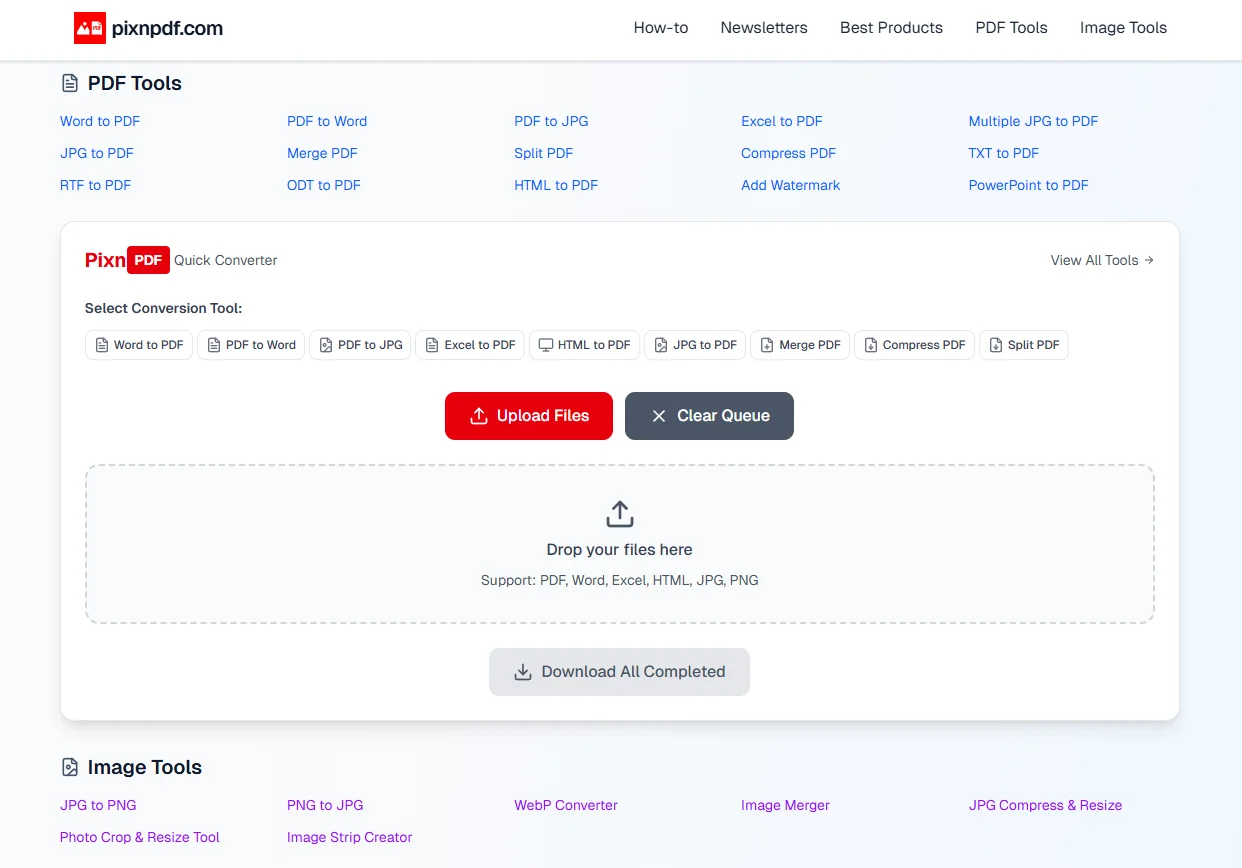
A privacy-first image ↔ PDF converter that runs every conversion entirely in the browser — never uploading the image to a server.
Results
The Brief
Market-leader free converters (smallpdf, ilovepdf) are server-based — unacceptable for privacy-conscious users. Free + privacy-first + processing speed = market gap.
The Approach
I applied the Technical pillar (CWV optimization, Web Worker isolation) and Schema pillar (SoftwareApplication entity, FeatureList). On the AEO side, the H2 structure directly answers "how to convert image to PDF" intent.
See the full process → 47-Point AI-Ready SEO Audit methodology.
Tech Stack
The Build
Web Worker-based conversion: the main thread stays unblocked; 50MB+ files process without UI freeze. This held INP under 100ms.
PDF.js + jsPDF + Sharp browser polyfill; all three formats (image-to-pdf, pdf-to-image, pdf-merge) ship in lazy-loaded modules.
The privacy message sits in the top 20% of the page: "Your files never leave your device". A trust signal and a service-independence advantage (no CDN/AWS dependency).
Steps Applied
All computation in Web Worker; main thread free; INP < 100ms p75.
Format-driven converter dynamic import; initial bundle 180KB.
Top 20% of page: "files never leave your device"; trust + entity disambiguation.
Honest Reflection
Version one shipped all three converter modules in a single bundle — initial JS payload hit 850KB. On mobile, first render crossed 4 seconds. Version two switched to dynamic import + lazy-load and trimmed the initial bundle to 180KB. "One bundle" is tempting on browser-only utilities, but it's lethal for a mobile-first audience.
Screenshots
Same 47-point methodology, $499 fixed price, 5-7 business days. Book the audit.